The Midlife Move: How Relocating Can Redefine Your Work, Habits, and Next Chapter
A midlife move—changing where you live somewhere between your early 40s and beyond—can be a practical way to redesign your lifestyle, career direction, and personal goals. It’s not “running away”; it’s choosing a setting that makes the life you want easier to live. The same person in a different environment often behaves differently: your routine shifts, your social circle changes, your costs change, your commute changes, your energy changes. That’s the point.
A clear takeaway before you scroll
Relocation works best when it’s treated as a designed reset, not a panic decision.
The strongest moves balance emotion (“I want a fresh start”) with logistics (“Can I afford this long-term?”). If you connect the move to a few measurable priorities—health, community, work flexibility, time—you can make the change feel steady rather than scary.
Why a new place can make you feel like a new person
Midlife tends to come with a unique mix: you know yourself better, but you also feel the cost of misalignment more sharply. A move can be powerful because it forces a re-evaluation of defaults: the automatic yeses, the stale obligations, the “we’ve always lived here” story.
Problem: your current location may be optimized for an older version of you.
Solution: choose a home and neighborhood that support what you value now.
Result: your daily life nudges you toward the habits and goals you keep saying you want.
A guide to simplify the decision (what you want vs. what you need)
Your fresh-start priority | What it looks like in daily life | Home features to prioritize | Neighborhood signals to look for |
More time and less friction | shorter errands, easier routines | low-maintenance home, efficient layout | nearby services, reliable transport options |
Better health and energy | you move more without forcing it | light, ventilation, walkable access | parks, safe walking routes, fewer long drives |
New community | you see people regularly | flexible hosting space | clubs, classes, volunteer groups, community events |
Career flexibility | less burnout, more options | quiet workspace, stable connectivity | diverse employers, coworking, training access |
savings grow again | predictable ongoing costs | stable local economy, realistic property taxes/fees |
When a move and a career shift support each other
For many people, midlife relocation pairs naturally with career change: new location, new rhythm, new professional identity. Changing careers can be a powerful self-improvement move when stagnation starts draining motivation and wellbeing, because it aligns work with values and restores a sense of progress. Research discussions around workforce burnout also point to a related frustration: when employers prioritise hiring externally rather than developing existing people, growth pathways can feel blocked and skills gaps can widen—pushing workers to look elsewhere for advancement. If you want a starting point for career tools and research-led support, explore UOPX Career Institute resources.
The neighborhood matters more than the kitchen
It’s easy to get dazzled by countertops and forget the street. For a midlife reset, the neighborhood is the “invisible roommate” you’ll live with every day. Here’s a practical shortlist to guide your scouting (and keep you from falling in love too fast):
- Daily needs within reach: groceries, pharmacy, healthcare, green space
- Noise patterns: traffic, nightlife, construction, schools (visit at different times)
- Safety and comfort: your own sense of ease walking around (day and evening)
- Community fit: are there places you’d actually go—cafés, libraries, gyms, faith centres, studios?
- Future-proofing: stairs vs. single-level living, access, and overall ease of movement
- Climate and risk: heat, flooding, wildfire, storm exposure; insurance availability and cost
- Transport reality: how you’ll move if driving becomes harder or less desirable later
Decluttering Before the Move: start fresh, travel light
Before relocating, it’s worth taking stock of what’s actually worth bringing. Midlife moves work best when you’re not dragging old clutter into a new chapter. Downsizing isn’t just about space—it’s about shedding the weight of what no longer fits your current goals. If you’re looking to donate or responsibly part with items, Gone for Good offers an easy, ethical way to clear your home and give your belongings a second life.
The Midlife Move Method: a real-estate-minded how-to
- Write a two-sentence “why.” If you can’t summarise it, you’ll get pushed around by listings.
- Set a comfort budget, not just a maximum budget. Include insurance, utilities, repairs, fees, and commuting.
- Choose your non-negotiables (three only). Example: quiet, walkability, and a separate workspace.
- Do a “two-week life test.” Try the new place like a local: shop, walk, commute, sit in traffic, spend evenings out.
- Compare neighborhoods using the same questions. Don’t improvise your criteria each time.
- Check the boring documents early. Local rules, any restrictions, building condition, and long-term maintenance expectations.
- Plan for exit, not just entry. If you had to sell or rent in five years, would the home still make sense?
- Negotiate with patience. A rushed purchase can turn “fresh start” into “new stress.”
- Design your first month. Book a few anchors—classes, meetups, routines—so the move becomes a life, not just an address.
A helpful tool for comparing “quality of life” trade-offs
If you’re choosing between regions or countries, it helps to look beyond salary or house size and consider everyday wellbeing factors. The OECD’s Well-being Data Monitor brings together internationally comparable indicators across areas like housing, jobs, safety, community, and work-life balance, and it includes the Better Life Index for side-by-side comparisons. It won’t pick your city for you, but it can help you ask smarter questions about what “better” really means in practice. Use it as a discussion tool with your partner or family: pick two or three dimensions you care about most, then see how different places stack up.
FAQ
Is moving in midlife a “bad financial decision”?
It depends on the move, not the age. A move can improve finances if it lowers recurring costs or improves earning options, but it can hurt finances if it increases debt, maintenance, or insurance risk without a plan.
How do I avoid buying the wrong home when emotions are high?
Use a written scorecard (budget comfort, neighborhood fit, future-proofing) and visit at multiple times. Make sure one calm, detail-oriented person reviews the decision with you.
Should I rent first or buy immediately?
If the area is unfamiliar, renting first can reduce risk and help you learn neighborhood patterns before committing. Buying immediately can work if your criteria are clear and you have done a real “life test.”
What’s the biggest mistake people make?
Optimizing for the house while ignoring the daily ecosystem—transport, community, services, and long-term livability.
Conclusion
A midlife move can be a reset that turns intention into momentum—if you choose a place that supports your values, not just your fantasies. Focus on neighborhood fit, realistic affordability, and future-proof comfort. Treat the move like a designed project with a first-month plan, not a leap into the unknown. Done well, relocating becomes less about “starting over” and more about finally living in alignment.
Related Posts
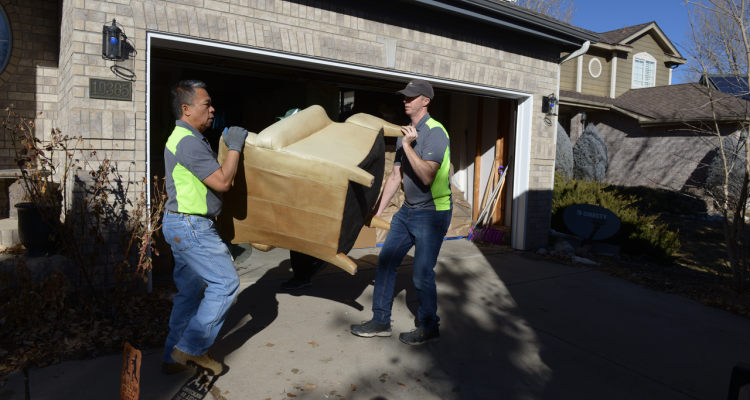 Decluttering a Home the Right Way: Eco-Friendly Estate Cleanout Tips That Actually Work
Decluttering a home can feel overwhelming—especially when it involves years, or even decades, of accumulated belongings.
Read More Gone For Good Expands Eco-Friendly Junk Removal to Colorado Springs
Gone For Good expands to Colorado Springs offering green junk hauling, estate cleanouts, and responsible disposal with our Reduce, Resell, Recycle approach.
Read More Nothing Truly “Goes Away”: The Ethos Behind Gone For Good
In a world where convenience often outweighs responsibility, it’s easy to treat unwanted items as disposable — out of sight, out of mind. But what if removal didn’t have to mean waste? What if the process of clearing space could also create positive impact? At Gone For Good, we believe junk removal isn’t just about taking things away — it’s about redirecting value, reducing environmental strain, and building a business model rooted in purpose. This is the ethos that guides everything we do — and why it matters more now than ever.
Read More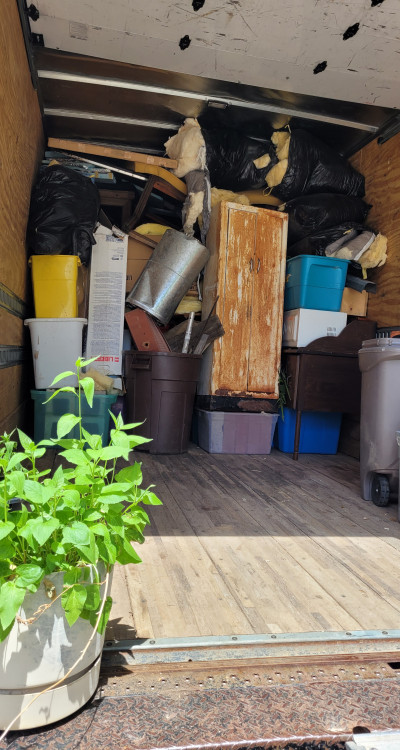 How to Simplify Your Life with Junk Removal and Thrift Shopping in Colorado Springs
Learn how combining junk removal services and thrift shopping in Colorado Springs can simplify your life and make a positive impact on the community.
Read More